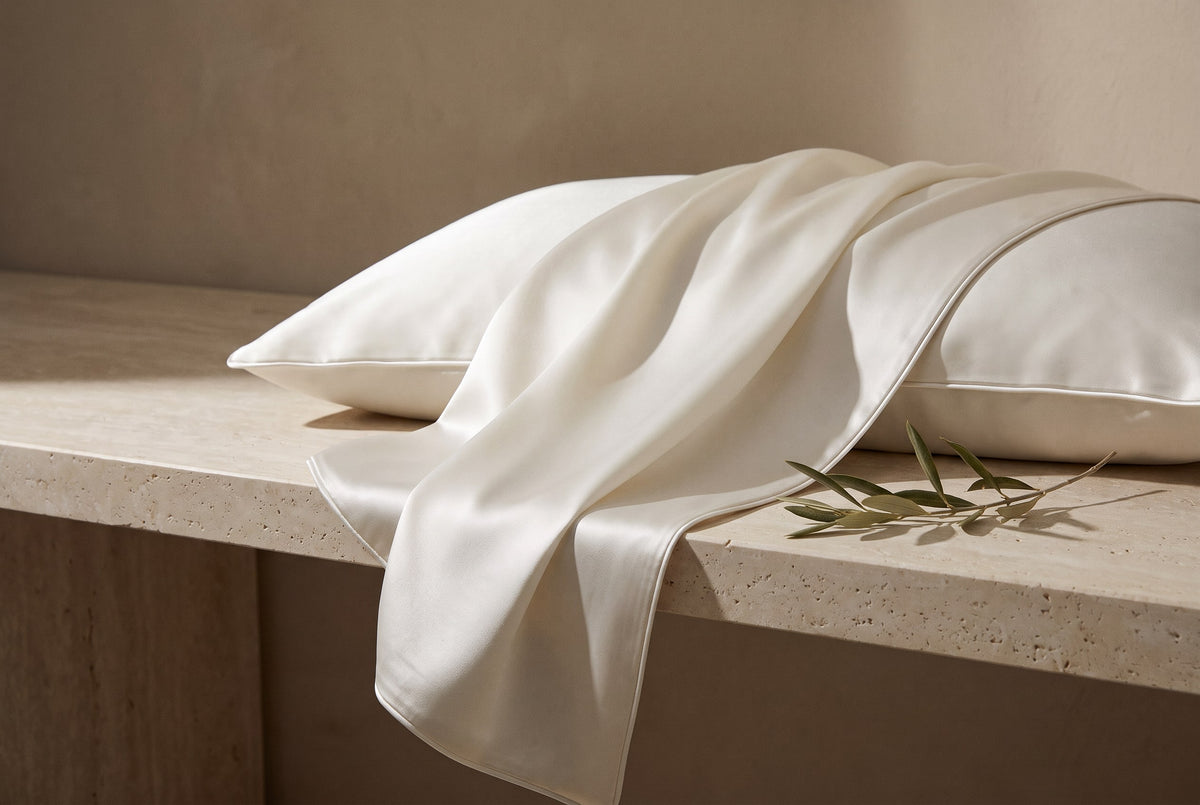
Silk is a natural protein fibre formed as a long continuous filament. That continuity creates a naturally smooth surface with fewer fibre ends than a staple-spun textile.
Properties
What it is. Silk behaves more like hair than cotton. Heat, enzymes and friction can damage the protein structure, while careful cold washing preserves its softness and light-reflective surface.
Why we choose it. We choose silk for pillowcases and close-to-skin textiles where a smooth, low-friction feel matters most.
Look and feel. Light, fluid and cool to the touch, with a restrained sheen rather than a glossy synthetic shine.
Where it appears. Silk pillowcases.
Natural character. Gentle creasing and small shifts in lustre are natural. The fabric may show temporary pressure marks that relax with careful handling.
Care
Use cold water and silk-safe detergent only as permitted by the label. Avoid soaking, wringing, enzymes, bleach and heat. Dry flat in shade.
Good to know. Silk weight, weave and dye affect care. Always follow the sewn-in label instead of relying on a generic “silk” instruction.
Why does my silk pillowcase feel cooler than a cotton one?
Silk’s continuous filament fibre has a smoother surface than woven cotton, which reduces friction and heat build-up against skin overnight.
Can I machine wash a mulberry silk pillowcase?
Carefully. Use a silk cycle inside a mesh bag with a pH-neutral detergent, or hand wash in cool water. Never bleach or wring it, since silk is weaker wet than dry.