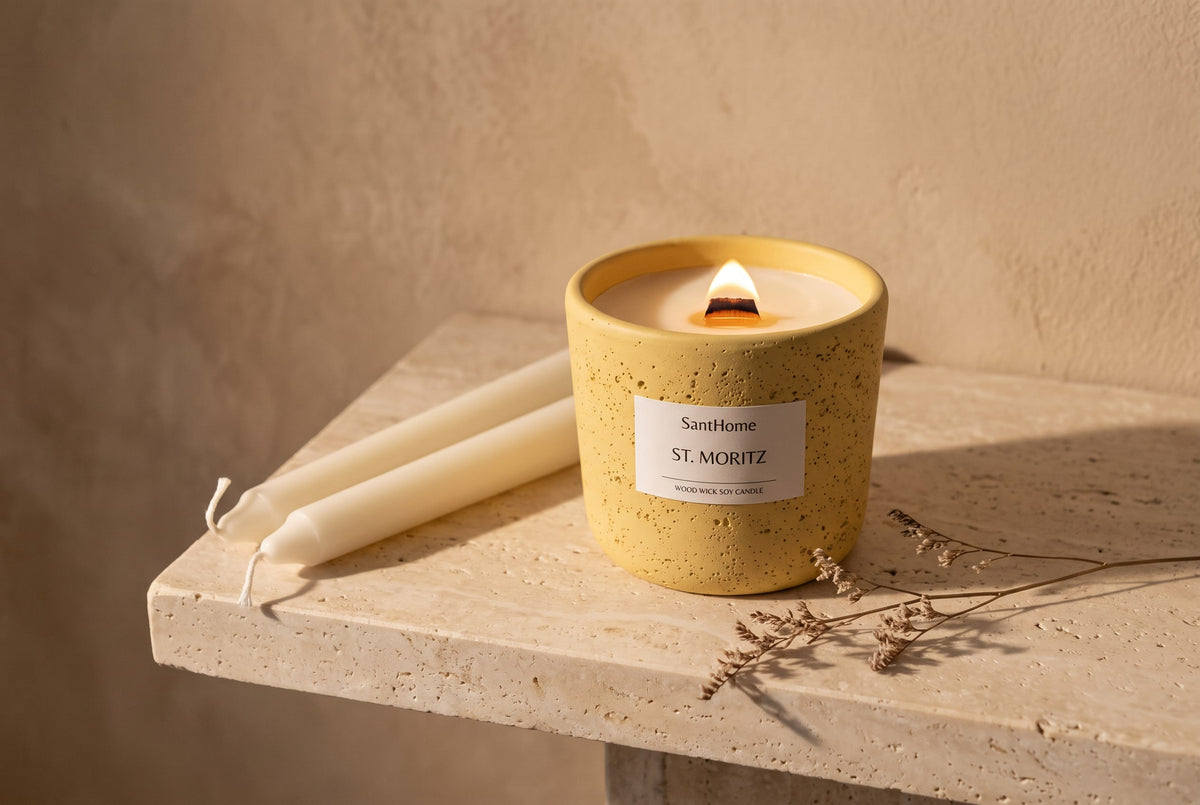
Lit wood wick soy candle in a yellow ceramic pot beside ivory taper candles on stone

Soy wax

Soy wax is produced from soybean oil that has been processed into a solid candle wax. It melts at a lower temperature than many mineral waxes, allowing a broad melt pool to form around the wick.

Soy wax

Properties

What it is. Wax is only one part of candle performance. Wick type, vessel diameter, fragrance load and room conditions determine how evenly and cleanly a candle burns.

Why we choose it. We choose soy-wax candles for their slow rhythm, soft appearance and ability to carry fragrance gradually through a room.

Look and feel. Softly opaque and creamy when cool, clear and liquid around the flame.

Where it appears. Scented candles with wood wicks, cotton-wick taper candles and candles in glass vessels.

Natural character. Frosting, small surface crystals, colour shifts or an uneven top after burning can occur in soy wax. These changes are cosmetic and often natural to plant-based wax.

Care

Trim the wick, respect the maker’s maximum burn time and keep the melt pool free from debris. Let the candle cool fully before moving it.

Good to know. Clean burning does not mean smoke free under every condition. Drafts and an overlong wick can make any candle soot.

Made of soy wax

Soy wax FAQs

Why does my soy candle have a small dip or tunnel in the middle?

This happens when an early burn is put out before the melt pool reaches the jar’s edge, leaving a ring of unmelted wax. Let the first burn run the full width of the jar to prevent it.

Does soy wax burn longer than regular candles?

Yes. Soy wax burns more slowly than paraffin, so a candle of the same weight lasts longer, and it melts at a lower temperature for a wider melt pool.